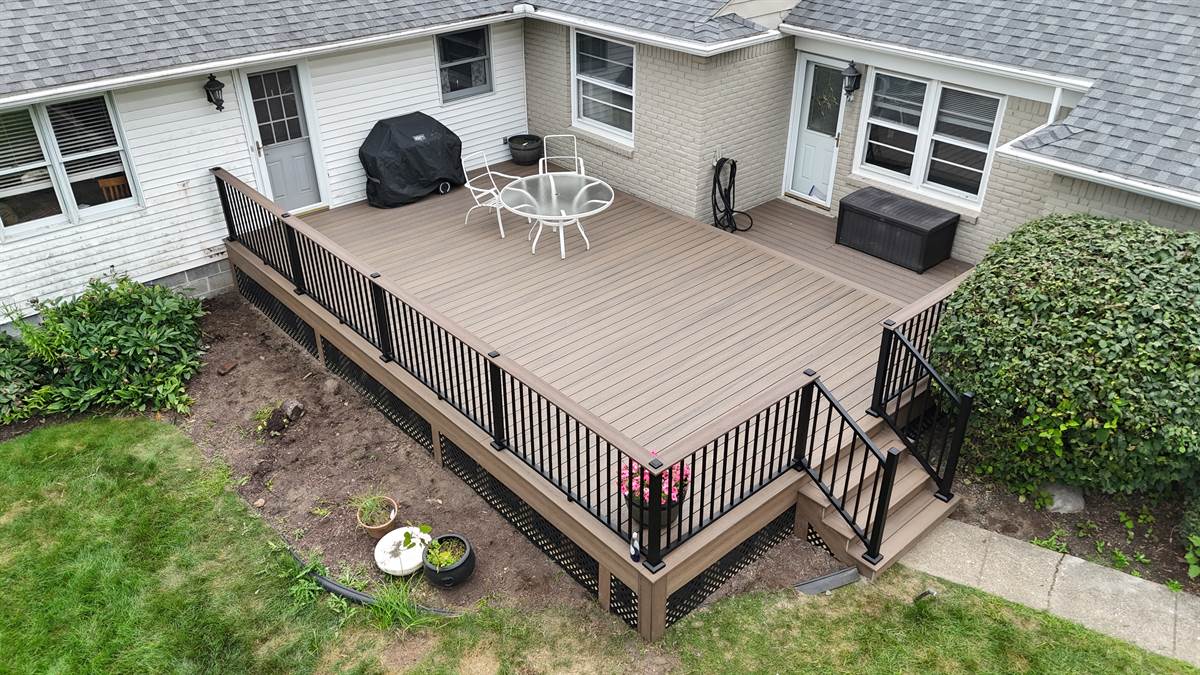
A well-built deck is more than just an outdoor platform—it’s a carefully engineered structure designed for strength, safety, and long-term performance.
At Titan Decks, we believe homeowners should understand what goes into their deck. Whether you’re planning a new build or replacing an existing structure, knowing the anatomy of a deck helps you make better decisions and follow along throughout the construction process.
What Makes Up a Deck?
Every deck—whether built with composite or wood materials—relies on a structural system that transfers weight safely to the ground.
At its core, a deck is a framed platform supported by footings, posts, beams, and joists, then finished with decking, railing, and accessories.
Below is a breakdown of the key components that make up a professionally built deck.
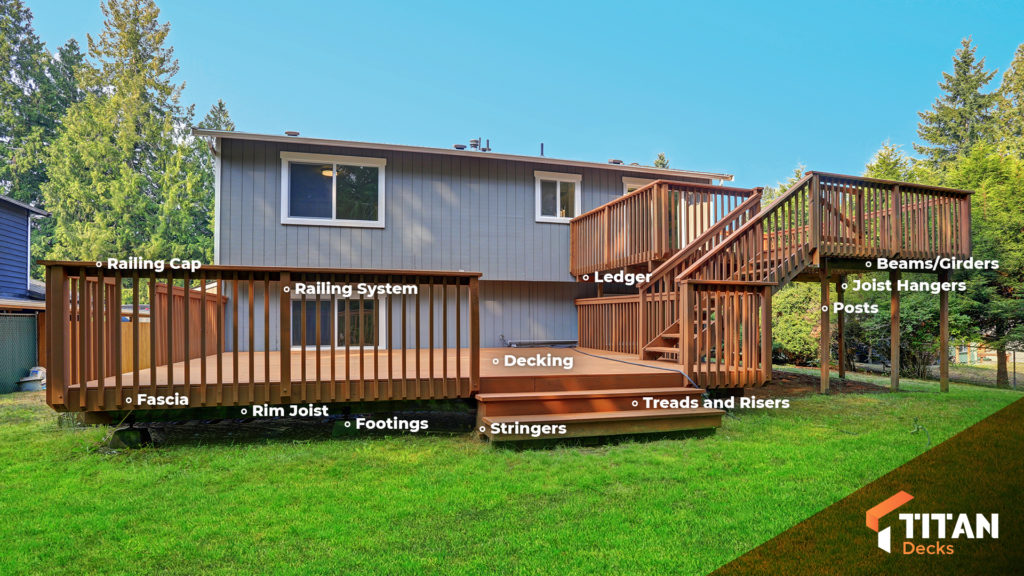
Deck Anatomy: Key Components Explained
Footings
Footings are the foundation of your deck. These are typically concrete piers installed below the frost line to prevent movement caused by Michigan’s freeze-thaw cycles. They support the entire structure by anchoring it to stable ground.
Post Base Brackets
These metal connectors attach the posts to the footings. They elevate the wood off the concrete, helping prevent moisture damage and extending the life of the structure.
Ledger Board
The ledger is a critical structural component that attaches the deck directly to your home. It supports one side of the deck and must be properly flashed and fastened to prevent water intrusion.
Posts
Typically 4×6 pressure-treated lumber, posts transfer the load of the deck down to the footings. They also often serve as the base for railing systems.
Beams (Girders)
Beams run horizontally and support the joists. They distribute the weight of the deck across the posts and are a key part of the structural framing.
Joists
Joists are evenly spaced framing members (often 12″ or 16″ on center) that run perpendicular to the beams. These support the decking surface and determine the overall strength and feel of the deck.
Joist Hangers
These metal fasteners secure joists to the ledger board or beams. Proper installation is critical for structural integrity and code compliance.
Rim Joist
The rim joist forms the outer edge of the deck frame. It ties the structure together and provides a finished edge for fascia installation.
Blocking / Bridging
Short pieces of lumber installed between joists to prevent twisting and movement. Blocking improves structural rigidity and helps distribute loads more evenly.
Surface & Finishing Components
Decking
This is the visible surface of your deck. Options include natural wood or low-maintenance composite materials like Trex, TimberTech AZEK, and Deckorators—each offering different benefits in durability and appearance.
Fascia
Fascia boards wrap the perimeter of the deck, covering exposed framing members for a clean, finished look.
Railing System
Railings provide safety and define the space visually. Modern systems can include composite, aluminum, cable, or glass options depending on the style of the home.
Stair Components
Stringers
Angled structural supports that carry the weight of the stairs. These are precision-cut to ensure proper rise and run.
Treads and Risers
Treads are the horizontal stepping surfaces, while risers are the vertical pieces between each step. Together, they create safe and comfortable stair access.
Stair Railing System
Includes posts, handrails, and balusters designed to meet safety codes while complementing the overall deck design.
Why Deck Anatomy Matters
Not every deck includes every component, and the exact design will vary based on your home, layout, elevation, and local building requirements.
Understanding these elements helps you:
- Ask better questions during your consultation
- Recognize quality construction practices
- Feel confident throughout the building process
At Titan Decks, we handle every detail—from design and material selection to permits, inspections, and final construction—so your deck is built the right way from the ground up.
Deck Anatomy FAQs
How much does it cost to build a deck in Southeast Michigan?
The cost of building a deck depends on size, materials, and design complexity.
Most homeowners can expect:
- Pressure-treated wood decks: $35–$55 per square foot
- Composite decks (Trex, TimberTech AZEK, Deckorators): $55–$85+ per square foot
Additional features like stairs, lighting, railings, and multi-level designs will increase the total investment.
What is the most important structural part of a deck?
The most critical components are the footings, ledger board, posts, and beams.
These elements support the entire structure and ensure the deck remains stable, level, and safe over time.
What spacing should deck joists be?
Joist spacing is typically:
- 16 inches on center for standard applications
- 12 inches on center for composite decking or higher-end builds
Closer spacing creates a stronger, more rigid deck surface with less bounce.
What type of decking material lasts the longest?
Composite decking materials like Trex, TimberTech AZEK, and Deckorators generally last longer than wood.
They resist moisture, rot, and insect damage and require significantly less maintenance over time.
Why are footings installed below the frost line?
In Michigan, footings must be installed below the frost line to prevent movement caused by freezing and thawing soil.
This ensures the deck remains stable and does not shift or settle unevenly.
What adds the most cost to a deck project?
The biggest cost drivers include:
- Composite decking materials
- Custom railings (metal, cable, glass)
- Multi-level designs
- Stairs and landings
- Lighting and accessory features
These elements enhance both functionality and appearance but increase overall project cost.
Start Your Deck Project with Confidence
If you’re planning a new deck or replacing an existing one, our team is here to help.
Request your consultation today and let Titan Decks design and build an outdoor space that’s engineered for durability, functionality, and long-term enjoyment.