Deckorators Mineral Based Composite:

What is Deckorators Mineral Based Composite?

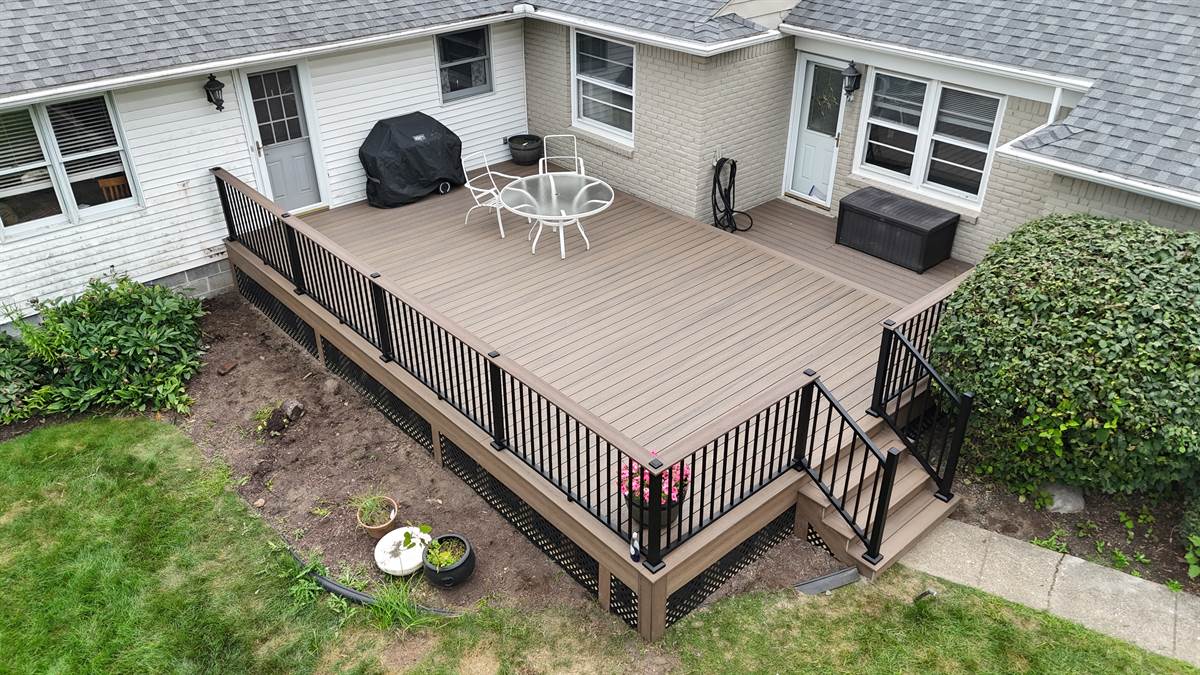
Deckorators® Voyage decking is made with our patented Surestone™ technology to deliver a comfortable, safe, and lightweight surface for your outdoor space. Voyage mineral-based composite decking boards allow you to recreate a wood-floor look or create a totally custom design for your raised deck, in-ground patio, or boat dock.
Advantages of Mineral Based Composites for Decking

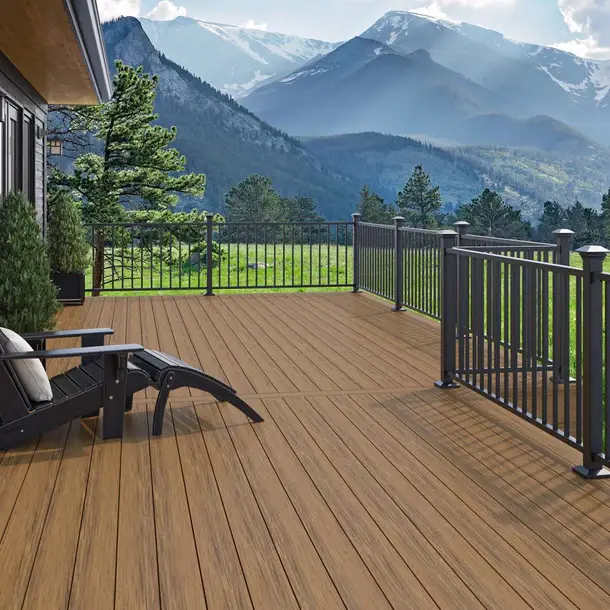
There’s no uncertainty here. From the first plank to every moment after, the possibilities are endless. And the performance is absolute. This is decking done differently through mineral-based ingenuity. With a durability that embraces the seasons and peace of mind that lasts a lifetime, any outdoor living space can now be transformed into a year-round sanctuary. By combining distinctly natural wood-grain patterns with rich colors, it’s never been easier for your outside space to become an extension of you. A space that must be seen, touched, and stood upon to be believed. The decking bar has been raised, and the difference is unmistakable. You can be sure of it. Surestone™.

Durability and Longevity

Deckorators Mineral Based Composite is known for its exceptional durability and longevity. This material is designed to withstand the elements, making it a reliable choice for long-term use. With proper maintenance, Deckorators Mineral Based Composite can maintain its quality and appearance for many years to come. Its resistance to fading, staining, and rotting ensures that your deck will remain strong and beautiful, even in harsh weather conditions.

Low Maintenance Features

Deckorators Mineral Based Composite requires minimal upkeep, making it an ideal choice for those who want a beautiful deck without the hassle of constant maintenance. It is resistant to staining and fading, meaning you won’t need to re-stain or repaint regularly. The composite material is also splinter-free, ensuring a comfortable and safe surface for walking barefoot. Additionally, its durable nature means that it can withstand various weather conditions without deteriorating, saving you time and money on repairs.

Environmental Benefits of Mineral Based Composites

Mineral-based composites are eco-friendly materials made from sustainable resources, contributing to a greener environment. These composites are recyclable and reduce the need for harvesting natural wood, helping to preserve forests. They also emit fewer volatile organic compounds (VOCs) during production, promoting better air quality. Due to their durable nature, mineral-based composites have a longer lifespan, reducing the amount of waste generated from frequent replacements. Their sustainable and low-impact properties make them a preferable choice for environmentally conscious projects and initiatives.

Ease of Installation

Deckorators Mineral Based Composite decking is known for its straightforward installation process. You can easily install these composite boards yourself, saving time and labor costs. The pre-drilled holes and hidden fastener system make the installation process smooth and efficient. Whether you are a seasoned DIY enthusiast or a first-time installer, you will find Deckorators Mineral Based Composite decking a breeze to set up.

Resistance to Decay and Insects

Deckorators Mineral Based Composite is highly resistant to decay and insects, making it a durable and long-lasting option for outdoor decking. This composite material is designed to withstand the elements and prevent damage from pests, ensuring your deck remains in top condition for a long time.

Comparison with Other Decking Materials

Deckorators Mineral Based Composite offers longer-lasting durability than traditional wood decking. It requires minimal maintenance and is resistant to rot, mold, and insects. Unlike wood decking, which needs regular staining and sealing, Deckorators Composite decking only needs occasional cleaning with soap and water to maintain its appearance. Additionally, it provides a wider range of design options and colors compared to wood, giving you more flexibility to customize your outdoor space to your liking.

Ready to Build with Deckorators Voyage?

If you’re looking for a composite decking option that combines strength, beauty, and sustainability, Deckorators® Voyage is an outstanding choice.

👉 Learn more about composite deck construction at Titan Decks — your trusted source for expert design, installation, and premium decking products in Southeast Michigan.
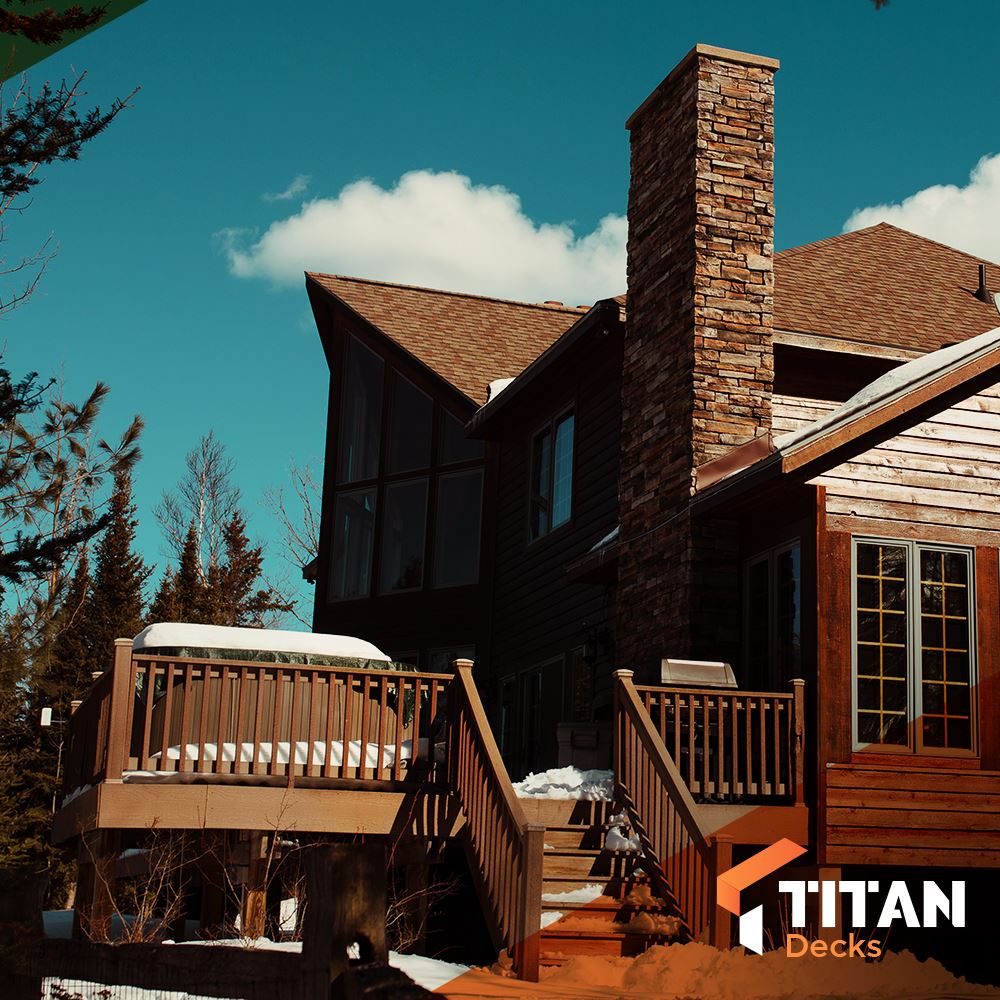
 

How To Keep Your Deck Warm

Even on cold nights, it can be fun and relaxing to bundle up and head outside. The fall and winter air is fresh and brisk. It’s invigorating. With a little investment, you can add a heating element to your deck, making it a year-round space to gather and enjoy. We’re going to share a few ways you can keep your deck warm enough to enjoy all year round, even during some of the coldest months.

Fire Pit

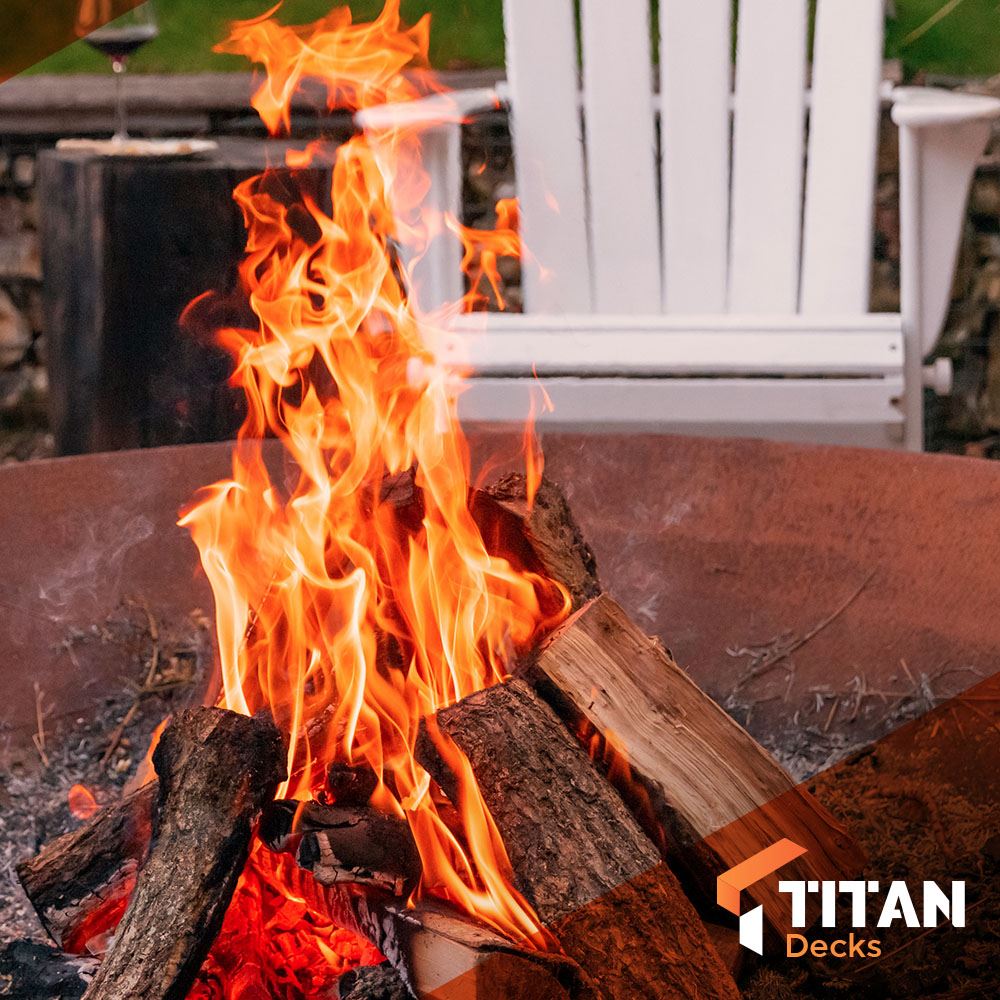
Huddle around a fire pit built into your deck. There are different choices available, from kits to free-standing iron bowls. Most are either gas or wood-burning. But, whatever choice you make, they’ll keep you toasty and your deck warm all winter long. 

Fire/heater table

Fire tables serve a dual purpose. They look beautiful while keeping you toasty. These come in so many varieties of shapes and sizes, just go with the look you like best. 

Space Heaters

Maybe having a fire burning on your deck makes you nervous. Electric space heaters with infrared bulbs are the perfect alternative. There are outdoor space heaters that you can place around a seating area to keep you warm. There are also heaters that can be permanently installed onto your deck. 

Chimineas

A chiminea is a cool fire feature usually made out of ceramic or clay. You can place it on your deck, but make sure it’s stable. Add a screen and a chimney extension for smoke-free warmth to sit by. 

Hot Tub

So, maybe you don’t want to add a heating element to your deck. But, another way to enjoy the outdoors in the cold is to step into a warm, bubbling hot tub. It doesn’t matter if it’s snowy or cold when you’re chilling in a hot tub. Make sure you bundle up to go back inside, though. 

Just because it’s cold out doesn’t mean you can’t hang out on your deck, especially once you have a way to heat things up. 

Need to build a deck first? Call Titan Decks. Get your free estimate scheduled today. 

How To Enjoy Your Deck During The Winter

Your deck is the center of family life during the summer. You work, rest, and play on your treasured outdoor living space. But then the cold harshness of a Michigan winter sets in, and you watch the snow accumulate on the deck railings. You may long for those warm months, but did you know you could still find ways to enjoy your deck, even during the winter?

Winterizing Your Deck

Whether your deck is made of composite or real wood, it needs to be taken care of so it can continue to take care of you. Regardless of what season you plan to use it, your deck needs to be winterized in order to lengthen its lifespan. 

Winter weather wreaks havoc on decks, especially if it is not taken care of properly. Here are a few steps you can take to maintain your deck:

  • Apply a protective finish prior to winter weather. 
  • Remove any noticeable mildew or mold
  • Clear off any clutter
  • Consider covering with a tarp
  • Use a broom (it’s more gentle on the composite) to remove snow and ice accumulation

Using Your Deck During The Winter

Michigan is a winter wonderland. Unless we are having one of our notorious mild winters, or until you have to shovel heavy snow off your driveway. There’s absolutely no reason you can’t enjoy the benefit of your deck, even when the snow and temperatures are falling. 

  • Add warmth: Firepits, patio heaters, or other outdoor heat sources can transform your deck into a cozy gathering spot. Roast marshmallows, drink hot chocolate, and breathe in the crisp air. With any type of fire, make sure it is raised above the deck surface to protect not only your deck but your home as well. 
  • Cover it up: Consider adding an awning close to your fire pit or outdoor fireplace. Throw a weather-proof seating arrangement down and you’ve got a great space to enjoy. 
  • Light it up: Adding colorful holiday lights to your deck will give it a festive feel all winter long. Make sure the lights you use are indoor/outdoor for the best results. 
  • Take a dip: Installing a hot tub on your deck will bring year-round enjoyment. Especially during the winter. It’s cold outside, but it’s warm in that jacuzzi. Have some thick towels or robes waiting for when you’re ready to get out. 
  • Remain the grillmaster: Just because it’s cold and snowy doesn’t mean you can’t grill up some kabobs, steaks, fish, or whatever is on the menu. Keep a shovel nearby, just in case you need to forge a little path to that grill. 
  • Come sled away: Maybe your yard doesn’t have a hill. The stairs, covered in a thick blanket of snow, can create a great makeshift ramp.

Turn Your Deck Into An Ice Rink

Your deck can become THE winter hotspot, guaranteed to bring all the kids to your yard.  Just add skates and hot chocolate, and it’s a wrap.

To turn your deck into an ice rink:

  • Lay down a large tarp, creating borders so water doesn’t immediately escape when added.
  • Secure the tarp using bricks or an equally heavy object to hold it down.
  • Fill the tarp with a few inches of water from your garden hose. Doing it all at once will create a smoother surface. 
  • If the surface seems lumpy, add a little bit of hot water to smooth it out.  
  • For any cracks, just fill in with snow and smooth it over. 
  • Allow it to freeze. 
  • When you aren’t using the ice rink, consider lightly covering it with another piece of tarp. 

That’s it. 

Super easy to do and will provide hours of fun for the family. If it snows, just use a broom or a light shovel to sweep it clear. 

Disclaimer: a weathered deck may not be able to support this adventure. Make sure your deck is in good condition before considering turning your deck into an ice rink because it has the potential to be hazardous. 

If enjoying the Michigan winters is something you’d prefer from inside your house, then consider having a deck cover professionally installed. 

If you’re in the market for a deck refresh or new build, contact Titan Decks today for a free estimate. Get 15% off your new deck build, now through February 1st.

Winter Is The Perfect Time To Build Your Deck

Guess what? You absolutely do not have to wait till spring to have your new deck built. Would you believe us if we told you that winter was actually the perfect time to build your deck? It is! Hear us out. We’re going to present some compelling evidence why you should consider having your deck built this winter. 

Build Your Deck In The Winter To Get A Head Start On Spring

Getting your deck built during the winter means, when spring comes, you can start using it immediately. And you won’t even have to wait for appointment availability or worry about finding a contractor who is able to take on your project. 

Not to mention, winter is a sort of off time for deck builders. This is beneficial for you because you’ll have more options when it comes to finding the right contractor for your decking project. 

Save Some Money

Many contractors offer winter build incentives. Take Titan Decks, for example. We’re giving you 15% off your deck if you choose to build during the winter. It’s a win-win for both of us. You’re helping us keep our employees working, and we’re helping you get the deck you want at a discounted price. 

A Winter Deck Build Will Get Your Project Done Faster

Warmer months are much busier for builders. Their schedules fill up quickly. Many deck builders have an 8-10 week wait to start a project in the spring and summer months.

Depending on the size of your deck, building during the winter may only have a 4-6 week completion time. 

Pulling Permits Will Be Quicker

Winter is a quiet time for builders, which means it’s equally quiet for your city office. Turn around time for permits during the spring and summer can take weeks. But, during the winter, the wait time is cut much shorter. 

Have We Convinced You?

So you see, it’s faster and cheaper to have your deck built in the winter. And, you’ll have so much more time to enjoy your deck once the weather warms up. Come March, you’ll completely miss the rush of people clamoring to get their deck built. 

To build your deck this winter, you can contact us to schedule your free estimate. As we mentioned earlier in this article, we are taking 15% off any new deck build scheduled between November and February so act now, our slots are already filling up and we don’t want you to miss out on this great offer. Financing options are available.  

The Anatomy of a Deck: Understanding Every Part of Your Outdoor Structure

A well-built deck is more than just an outdoor platform—it’s a carefully engineered structure designed for strength, safety, and long-term performance.

At Titan Decks, we believe homeowners should understand what goes into their deck. Whether you’re planning a new build or replacing an existing structure, knowing the anatomy of a deck helps you make better decisions and follow along throughout the construction process.

What Makes Up a Deck?

Every deck—whether built with composite or wood materials—relies on a structural system that transfers weight safely to the ground.

At its core, a deck is a framed platform supported by footings, posts, beams, and joists, then finished with decking, railing, and accessories.

Below is a breakdown of the key components that make up a professionally built deck.


Deck Anatomy: Key Components Explained

Footings

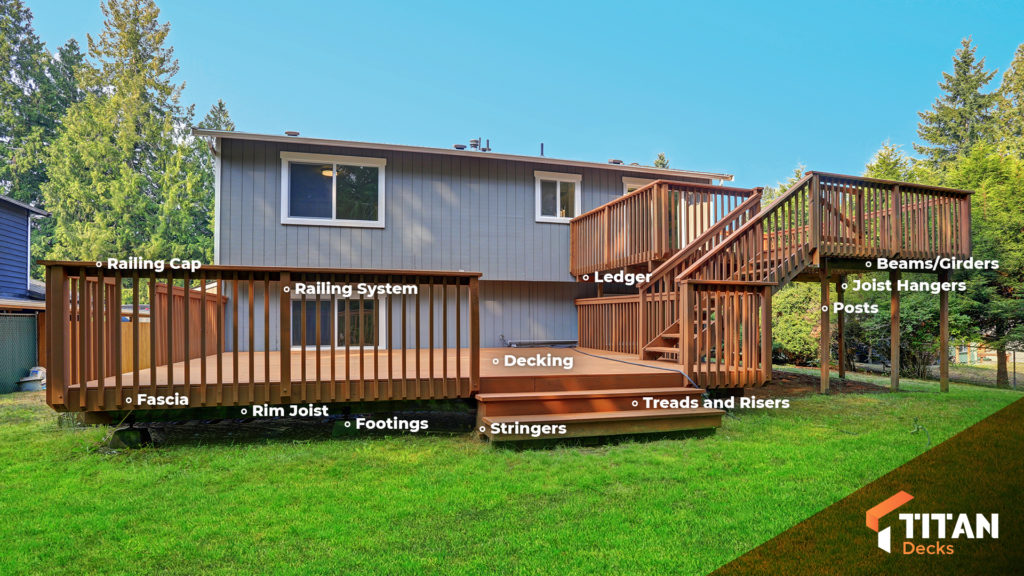
Footings are the foundation of your deck. These are typically concrete piers installed below the frost line to prevent movement caused by Michigan’s freeze-thaw cycles. They support the entire structure by anchoring it to stable ground.

Post Base Brackets

These metal connectors attach the posts to the footings. They elevate the wood off the concrete, helping prevent moisture damage and extending the life of the structure.

Ledger Board

The ledger is a critical structural component that attaches the deck directly to your home. It supports one side of the deck and must be properly flashed and fastened to prevent water intrusion.

Posts

Typically 4×6 pressure-treated lumber, posts transfer the load of the deck down to the footings. They also often serve as the base for railing systems.

Beams (Girders)

Beams run horizontally and support the joists. They distribute the weight of the deck across the posts and are a key part of the structural framing.

Joists

Joists are evenly spaced framing members (often 12″ or 16″ on center) that run perpendicular to the beams. These support the decking surface and determine the overall strength and feel of the deck.

Joist Hangers

These metal fasteners secure joists to the ledger board or beams. Proper installation is critical for structural integrity and code compliance.

Rim Joist

The rim joist forms the outer edge of the deck frame. It ties the structure together and provides a finished edge for fascia installation.

Blocking / Bridging

Short pieces of lumber installed between joists to prevent twisting and movement. Blocking improves structural rigidity and helps distribute loads more evenly.

Surface & Finishing Components

Decking

This is the visible surface of your deck. Options include natural wood or low-maintenance composite materials like Trex, TimberTech AZEK, and Deckorators—each offering different benefits in durability and appearance.

Fascia

Fascia boards wrap the perimeter of the deck, covering exposed framing members for a clean, finished look.

Railing System

Railings provide safety and define the space visually. Modern systems can include composite, aluminum, cable, or glass options depending on the style of the home.

Stair Components

Stringers

Angled structural supports that carry the weight of the stairs. These are precision-cut to ensure proper rise and run.

Treads and Risers

Treads are the horizontal stepping surfaces, while risers are the vertical pieces between each step. Together, they create safe and comfortable stair access.

Stair Railing System

Includes posts, handrails, and balusters designed to meet safety codes while complementing the overall deck design.

Why Deck Anatomy Matters

Not every deck includes every component, and the exact design will vary based on your home, layout, elevation, and local building requirements.

Understanding these elements helps you:

  • Ask better questions during your consultation
  • Recognize quality construction practices
  • Feel confident throughout the building process

At Titan Decks, we handle every detail—from design and material selection to permits, inspections, and final construction—so your deck is built the right way from the ground up.

Deck Anatomy FAQs

How much does it cost to build a deck in Southeast Michigan?

The cost of building a deck depends on size, materials, and design complexity.
Most homeowners can expect:

  • Pressure-treated wood decks: $35–$55 per square foot
  • Composite decks (Trex, TimberTech AZEK, Deckorators): $55–$85+ per square foot

Additional features like stairs, lighting, railings, and multi-level designs will increase the total investment.

What is the most important structural part of a deck?

The most critical components are the footings, ledger board, posts, and beams.
These elements support the entire structure and ensure the deck remains stable, level, and safe over time.

What spacing should deck joists be?

Joist spacing is typically:

  • 16 inches on center for standard applications
  • 12 inches on center for composite decking or higher-end builds

Closer spacing creates a stronger, more rigid deck surface with less bounce.

What type of decking material lasts the longest?

Composite decking materials like Trex, TimberTech AZEK, and Deckorators generally last longer than wood.
They resist moisture, rot, and insect damage and require significantly less maintenance over time.

Why are footings installed below the frost line?

In Michigan, footings must be installed below the frost line to prevent movement caused by freezing and thawing soil.
This ensures the deck remains stable and does not shift or settle unevenly.

What adds the most cost to a deck project?

The biggest cost drivers include:

These elements enhance both functionality and appearance but increase overall project cost.

Start Your Deck Project with Confidence

If you’re planning a new deck or replacing an existing one, our team is here to help.

Request your consultation today and let Titan Decks design and build an outdoor space that’s engineered for durability, functionality, and long-term enjoyment.

Free Consultation

Free Consultation